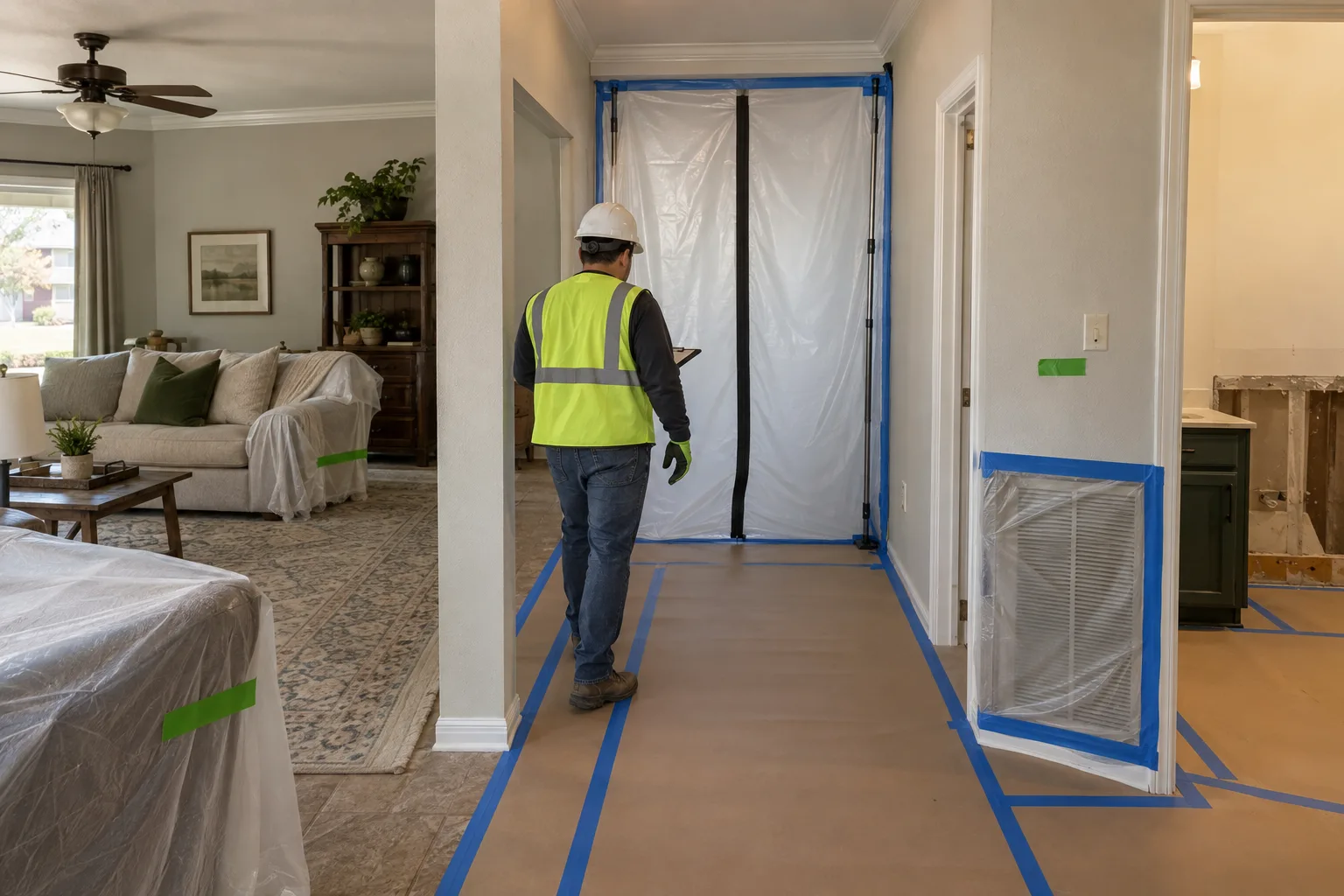
Interior demolition should begin with a written keep/remove plan, confirmed utilities, material-risk review, protection for occupied areas, and a debris route. A room that looks simple can hide structural, electrical, plumbing, and hazardous-material questions.
Mark what stays in the room
List cabinets, counters, flooring, fixtures, doors, trim, appliances, and built-ins. Mark each item keep, remove, or handled by another trade. Use painter’s tape or a printed plan on site so the boundary is visible without relying on memory.
Treat walls and ceilings as structural questions until checked
OSHA has stated that demolition rules apply to ceilings and interior non-load-bearing walls and partitions, with the engineering survey scope based on the work and existing condition. This does not turn a homeowner into an engineer. It means wall type and condition must be resolved by qualified people before removal. [OSHA interpretation on interior demolition]
Do not sample suspect asbestos material yourself
The EPA says material cannot generally be identified as asbestos by sight alone and advises trained, accredited professionals to take samples. Disturbing suspect material can release fibers. [EPA homeowner asbestos guidance] Lead, mold, and other regulated material may also require separate assessment.
| Resolve before work | Evidence to collect |
|---|---|
| Removal boundary | Marked photos or a room plan naming every keep/remove item. |
| Utilities | Who disconnects or makes safe electric, gas, plumbing, and HVAC. |
| Material risk | Property age, prior reports, visible damage, and professional test results where needed. |
| Protection | Occupied rooms, HVAC returns, finished floors, doorways, and dust path. |
| Debris route | Stairs, elevators, hallway width, floor protection, and loading rules. |
Protect the path, not only the room
Interior debris moves through the building. Identify shared halls, finished floors, corners, door frames, elevators, and occupied rooms along that route. Building management may control work hours, elevator reservations, or loading access.
Handoff questions
- Are fasteners, adhesive, backing, or framing included?
- Will utilities be left capped and safe by the responsible trade?
- Is patching or surface preparation included?
- Who owns dust cleaning outside the contained work area?
- What hidden condition stops the job for reassessment?
Sources were reviewed on September 28, 2026. Rules, site conditions, and service scope can change. Confirm current requirements with the responsible authority and the people performing the work.