Typical scope
- Small-structure dismantling
- Selective interior removal
- Debris loading and haul-off
- Work-area sweep after removal
Plan the teardown, protect what stays, and clear the debris in one practical scope.
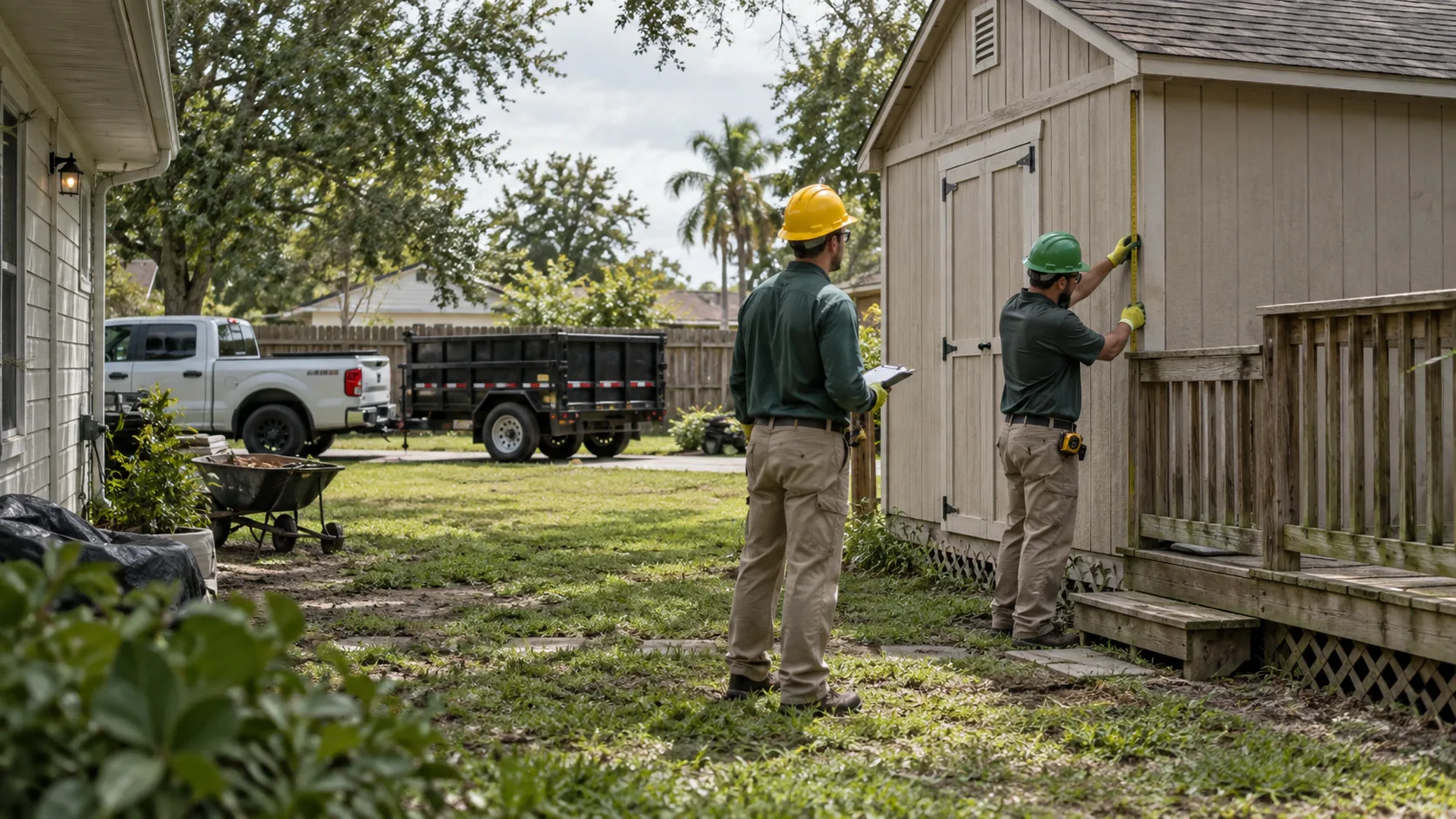
Light demolition for small structures, outdoor features, and selective interior removal. The estimate should identify what comes out, what stays, and where the removed material travels.
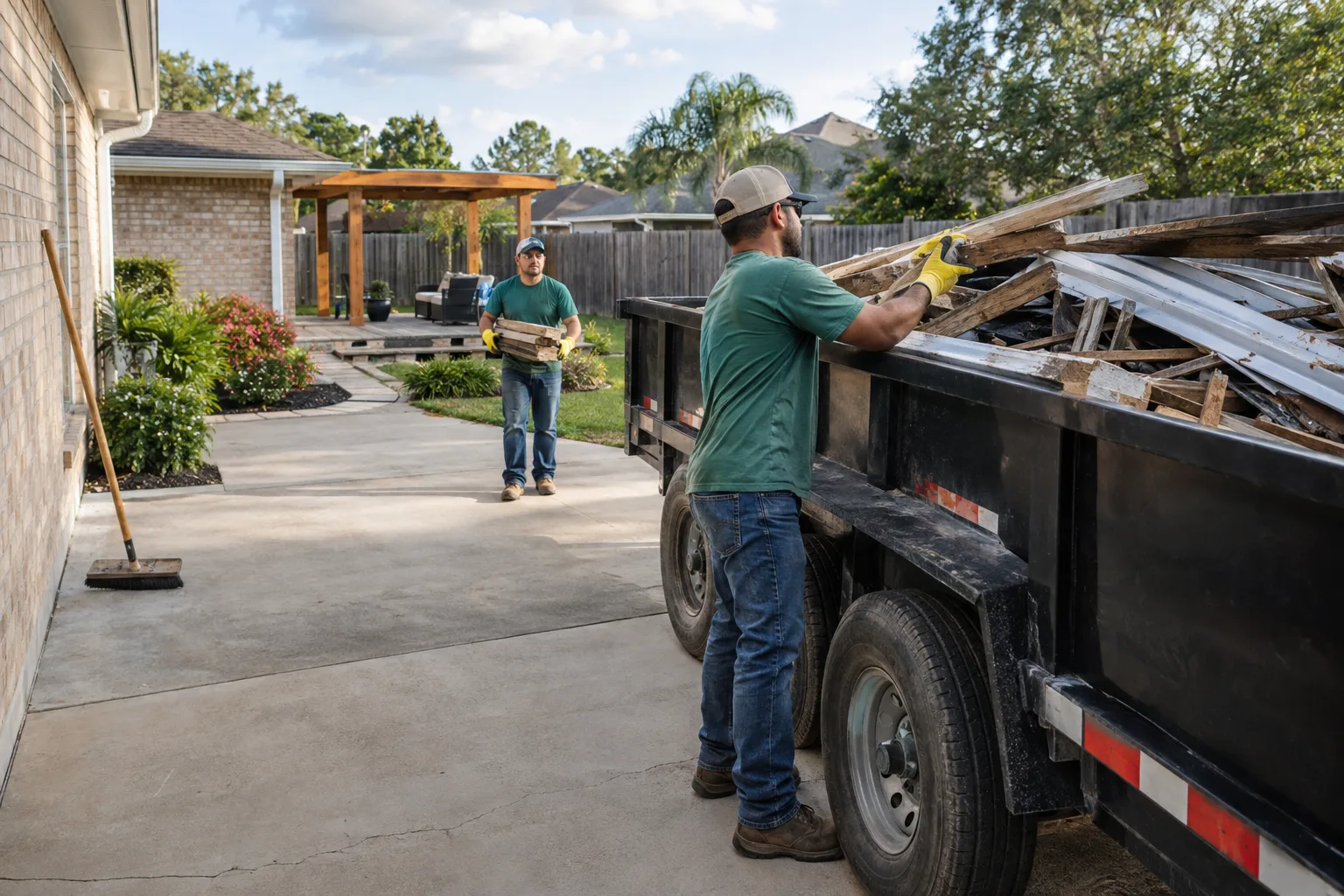
Tell the estimator about gates, steps, occupied areas, soft ground, parking limits, and the distance from the work zone to the loading point. Those details shape labor, protection, and equipment choices.
Remove personal items from the work zone, identify anything that must stay, and gather measurements or photos that show all sides.
Point out electrical, plumbing, gas, irrigation, and drainage. Stop if material may contain asbestos, lead, mold, fuel, chemicals, or another regulated hazard.
The agreed debris is loaded and the immediate work area is swept. Grading, repair, patching, or rebuilding is included only when written into the scope.
A phone conversation can establish fit and identify what still needs an on-site look.
Confirm which structure, contents, attached features, posts, footings, slab, and loose debris are included. Anything outside the written scope should be discussed before work starts.
Photos can help establish the likely scope. Access, hidden connections, material condition, and utility questions may still require an on-site assessment.
Mark nearby finishes, plants, equipment, utilities, and items to keep. The work plan should name the protection boundary before dismantling begins.
Call with the structure type, measurements, access notes, photos, and preferred timing.